What is Pneumonia?What is the relationship between pneumonia and blood oxygen?

What is Pneumonia?What is the relationship between pneumonia and blood oxygen?

Article overview

1. What is Pneumonia?
2. How Serious is Pneumonia?
3. Causes of Pneumonia
4. Symptoms of Pneumonia
5. Symptoms of Pneumonia in Children
6. What is the relationship between pneumonia and blood oxygen?
7. Wellue O2ring Blood Oxygen Monitor
8. How is Pneumonia Treated?

Respiratory illnesses, including pneumonia, remain a major concern to hospitals around the world, especially during the winter months when an influx of patients can put some hospitals into crisis mode.

Pneumonia ranges in severity from a mild illness to life-threatening. Anyone can contract pneumonia, but babies, young children and older people are particularly susceptible to the dangers of this illness (Healthdirect 2020).

Pneumonia is the leading infectious cause of death in children, with about 15% of deaths attributed to children under five (WHO 2019a).

What is Pneumonia?


Pneumonia is an acute infection of the lungs that causes the alveoli in one or both lungs to fill with pus and fluids.

Pneumonia is an acute infection of the lungs that causes the alveoli in one or both lungs to fill with pus and fluids. This results in lung consolidation (wherein the alveolar spaces are filled with fluid instead of air) and interferes with gas exchange (Better Health Channel 2018; Moyer 2018).

When a person has pneumonia, breathing is painful and oxygen intake is limited (WHO 2019b).

Pneumonia doesn’t discriminate across the lifespan and can affect any age group, though it is more common in young children and older adults (Better Health Channel 2018). Depending on the severity, some people may not necessarily need to be hospitalized, whilst others will.

Generally, those with more comorbidities or any problem that may exacerbate pneumonia will require hospital admission. Pneumonia can also be treated in the community as long as the individual has access to good medical and nursing care.

How Serious is Pneumonia?

In the United States alone, approximately $10 billion is spent each year to manage about 4 million episodes of, and almost 1 million hospitalizations for, pneumonia.

In 2017, over two million people died from pneumonia worldwide (Dadonaite & Roser 2019).

Causes of Pneumonia

 Pneumonia is caused by a viral, bacterial – or rarely – fungal infection (Healthdirect 2020). In some cases, it is triggered by an existing cold or flu that enables pathogens to access the alveoli (Better Health Channel 2018).

 Transmission commonly occurs by inhaling infected droplets in the air from a cough or sneeze of an infected person. It can also spread via blood (WHO 2019b).

Symptoms of Pneumonia

Symptoms may vary depending on age, the cause and severity of the infection, and any existing health problems (Better Health Channel 2018). Assessing the patient and gaining a comprehensive patient history is vital in diagnosis. Symptoms may include:

  • Coughing (dry or productive);
  • Fever, chills, or sweating;
  • Breathing difficulties;
  • Increased respiratory rate;
  • Fatigue or general malaise;
  • Little to no appetite;
  • Chest pain;
  • Abdominal pain or aches;
  • Blue coloring around the mouth (cyanosis); and
  • Nausea, diarrhea, or vomiting.

(Health Direct 2018; Better Health Channel 2018; Healthy WA 2015)

With correct treatment, a health improvement is usually observed within 7 to 10 days (Better Health Channel 2018).

Symptoms of Pneumonia in Children

  • Lethargy;
  • Irritability;
  • Chest pain;
  • Abdominal aches or pain;
  • Fever;
  • Coughing and difficulty breathing;
  • Little to no appetite; and Pallor.

(RCH 2018; Healthy WA 2015)

What is the relationship between pneumonia and blood oxygen?

Low oxygen saturation reflects an integrated noninvasive measure of the extent of lung parenchyma involvement by infection, consequent anatomic and physiologic derangements, and available cardiopulmonary functional reserve, and thus it seems to accurately capture the clinical severity of pneumonia.

Our results suggest that as a single independent criterion for hospital admission, oxygen saturation <92% might be both safer and clinically better-justified for patients with pneumonia.


-Clinical Infectious Diseases

Testing for fever, high pulse rate, crackly breath sounds, and low oxygen levels could be key to helping GPs distinguish pneumonia from less serious infections, according to a large study published in the European Respiratory Journal.

-ScienceDaily

Wellue O2ring Blood Oxygen Monitor


Wear the ring, it will automatically start to track your overnight blood oxygen saturation, heart rate and body movements continuously.

The report shows how long your oxygen is below 90%; how many times during a night your oxygen drops over 4%. You can share personal overnight oximetry reports with your doctor and it hepls you stay informed with your blood oxygen level at any time.

How is Pneumonia Treated?

Antibiotics

Treatment depends on the severity of pneumonia. In mild cases, the individual may be able to take oral antibiotics in a community setting. For more severe cases, they may require admission to hospital and treatment with intravenous antibiotics, oxygen therapy and chest physiotherapy (Dunn 2005).

As pneumonia is an infection, antibiotic therapy should be started as soon as possible. Sometimes this can be before the causative organism has been determined, however, the type of antibiotic can be changed if necessary. Depending on the severity of pneumonia, this can be in either an intravenous or oral form (Watson 2008).

Oxygen Therapy

Another important aspect of pneumonia treatment is oxygen therapy and maintaining adequate oxygen saturation levels. Depending on the patient, oxygen saturation levels should be above 93%, with the oxygen concentrations also varying depending on the patient, their comorbidities and severity of pneumonia. Humidified oxygen therapy can also be used in order to assist the patient with expectoration (Watson 2008).

Sometimes pulse oximetry can be inaccurate on these patients, and this is where arterial blood gas levels may play a role in ensuring adequate oxygenation is being achieved. Some patients, even when receiving high flow oxygen, can still remain hypoxic, and therefore, continuous positive airway pressure may be indicated (Farrell & Dempsey 2013; Watson 2008).


Pain Management

It is important to remember that a patient with pneumonia may be in pain. This means that their lung expansion may be compromised, which can further exacerbate their condition. This pain can often be described as pleuritic-type chest pain (Farrell & Dempsey 2013; Watson 2008).

Those with severe pneumonia may require treatment from physiotherapists. As part of an interprofessional team, physiotherapists can assist in not only any concurrent physical decline and chest physiotherapy, but can also help teach the patient effective breathing patterns and posture to promote lung expansion and expectoration (Watson 2008).

Hydration

 Other treatments for pneumonia should focus on ensuring the patient is adequately hydrated and if not, ensure that intravenous fluids are commenced. Adequate hydration is important for the expectoration of secretions and will also help with any associated hypotension. The individual may have increased fluid loss if they are febrile and continue to have an increased respiratory rate, therefore, urinary output should also be monitored, as this can flag deterioration in the patient’s condition (Dunn 2005; Watson 2008).

Wellue o2ring vs. Lookee ring

Wellue o2ring vs. Lookee ring

Are you on the search for a device that will assist you to track your oxygen degrees overnight?

Are you seeking guidance on which one out of the many options available is the best for you?

After heavily researching the best overnight pulse oximeter options to satisfy your wireless oxygen monitoring needs, I’ve located that it really comes down to two brand names: Wellue and Lookee.

To successfully carry out home overnight oximetry, I have actually figured out that a pulse oximeter that fits like a ring (like both tools evaluated below) is the most effective option. This is because they:

  • Fit conveniently
  • Stay on securely while sleeping (unlike fingertip pulse oximeters)
  • Do not have any type of electrical wiring that could be in danger of separating overnight

The Wellue O2Ring and Lookee Ring are both ring sensors overnight pulse oximeters with comparable features and price points. Consequently, to help you to make a decision which is the most effective overnight pulse oximeter for you, I’ve developed a helpful side-by-side contrast of these tools.

Fast Answer– Wellue o2ring vs. lookee ring.

Ultimately, when taking into consideration the Lookee vs Wellue O2ring oxygen monitor, I’ve identified that the Wellue O2Ring is the best-in-class choice for overnight oxygen monitoring.

The following table highlights crucial differences that show why I think the Wellue O2Ring is a much better choice for you.

Wellue O2Ring vs Lookee Ring Sleep Oxygen Monitor.

Wellue O2Ring Lookee Ring Sleep Oxygen Monitor
The design is less bulky and sleek, making it more comfortable to wear while sleeping The dimensions are slightly larger in this device
The ring portion is more sturdy and durable Some users report the ring is too thin and doesn’t seem like it will last long
Oxygen levels and heart rate are tracked more frequently (every second) Oxygen levels and heart rate are tracked every 4 seconds
The vibration alarm be used for detecting both low oxygen level and abnormal heart rate The vibration alarm can only be used for detecting low oxygen level
Analysis reports can be viewed on either a computer or a mobile app Analysis reports can only be viewed on a mobile app
Analysis reports can be printed for sharing with your physician Does not produce printable analysis reports
The device has dust and water resistance rating of IP24 Not water resistant

The Details.

My Choose: Wellue O2Ring.

The Wellue O2Ring is an amazing oxygen monitor, as first of all, it’s the ideal size and fit.

It fits comfortably over the thumb or finger, leaving the remainder of the hand free for movement.

The ring fit enables it to stay on safely throughout the evening as well as doesn’t slip off. The ring boundary is 2-3.2 inches (50-82 mm) and also gets used to fit within all finger dimensions in this variety.

This pulse oximeter accumulates an outstanding amount of data throughout one recording session, as it continually tracks oxygen levels, pulse rate, as well as motion every second.

It has an integrated memory for information collection, however, information can likewise be stored making use of the Android or iOS app or the Mac or PC software.

The app or software program offers overnight oximetry analysis as well as offers you accessibility to comprehensive evaluation reports of blood oxygen levels, heart rate, and also body movements.

It produces high-resolution pattern graphs with 4-second periods. You can likewise conveniently produce specialist PDF or CSV reports to immediately send to your doctor for more analysis.I recognize this is a great deal of talk about data, as well as you may discover it frustrating. The good news is that the records are easy to check out if you have the ideal assistance.

Now let’s get to among my favorite functions of the Wellue O2Ring. It vibrates when reduced oxygen levels or irregular heart rate is found.

The vibration attribute can be customized by the intensity of resonance, what you want it to vibrate for (ie, oxygen, heart price, or both), and also at what limit for each and every.

Moreover, an added benefit of the resonance alarm is that if you’re sharing a bed with a partner, it only wakes you up (unlike an audio alarm, which might wake up your partner).

Charging the device is very easy, as it only need a USB connection. Furthermore, the battery life of 12-16 hours is greater than adequate, as you can get about 2 evenings’ use from it before it needs a recharge.

Advantages And Disadvantages Reported by Consumers.

Pros Cons
Ring fit is comfortable, secure with no concerns for disconnecting overnight Some reported app issues
Vibrates when oxygen levels are below normal Some dislike the software
Can be set to vibrate at a customized oxygen level and vibration intensity Does not sync with Apple Health
Collects accurate readings and creates detailed analysis reports on app or computer software that can be printed and shared /

LOOKEE Ring

The Lookee Ring Sleep Oxygen Monitor is a strong contender with its patented ring sensor, silent vibration alarm, and compatible mobile app for viewing analysis reports.

The device is rectangular in shape and fits like a ring over the thumb or finger, freeing the rest of the hand. It continuously tracks oxygen saturation levels and heart rate, and records data every 4 seconds.

The Lookee Ring Sleep Oxygen Monitor has a silent vibration alarm that can be set to one of five different intensity levels to alert you when oxygen levels drop below a preset threshold limit.

You can set the threshold limit to your preferred level using the mobile app. It’s important to note that the vibration alarm cannot be used for heart rate.

Data collected by the device can be viewed in the compatible mobile app, which also generates helpful analysis reports to help you see how your oxygen levels are doing.

However, it’s not compatible with a computer and doesn’t generate printable reports to share with your doctor.

Pros and Cons Reported by Customers

Pros Cons
Ring fits comfortably and securely Some reports of the display being difficult to read
Vibrates when oxygen levels are low Some reports of ring being too thin and not durable
Can be set to vibrate at a customized oxygen level and vibration intensity Analysis reports cannot be viewed on a computer or printed
Collects accurate readings and creates detailed analysis reports on mobile app Does not vibrate when heart rate is low

Wellue O2Ring vs. Lookee Ring Sleep Oxygen Monitor


Wellue O2Ring Lookee Ring Sleep Oxygen Monitor
Works with CPAP Yes Yes
Fit Fits on thumb or finger Fits on thumb or finger
Product dimensions 1.5 x 1.2 x 1.5 in 1.8 x 1 x 1.8 in
Weight 15 g (0.52 oz) 18 g (0.64 oz)
Ring perimeter 2.4-3.4 in (60-86 mm) 2.3-3.1 in (59-80 mm)
Wireless capability Bluetooth Bluetooth
Prolonged tracking Continuously tracks oxygen levels and heart rate every second Continuously tracks oxygen levels and heart rate every 4 seconds
Oxygen level range 70-99% 70-100%
Alarm/notification Silent vibration alarm Silent vibration alarm
Customizable alarm Adjustable vibration intensity and threshold of blood oxygen and heart rate Adjustable vibration intensity and threshold of blood oxygen only
Printable/shareable reports Print/share professional PDF/CSV analysis report of oxygen levels and heart rate Reports can be viewed in app but does not generate printable PDF reports
Display interval in app 4 seconds 4 seconds
PC/Mac software Yes No
Battery Rechargeable via USB with 12-16 hours battery life Rechargeable via USB with >16 hours battery life
Built-in memory Yes, 4 sessions up to 10 hours each Yes, 4 sessions up to 10 hours each
Water resistant Yes (IP rating: IP24) No
Amazon rating 4.3 / 5 4 / 5

Wellue o2ring vs. lookee ring Closing Points

When it comes down to it, the Lookee Ring Sleep Oxygen Monitor is lacking a few key features, making it a less appealing ring sensor pulse oximeter option compared to the Wellue O2Ring.

Given the above points and the small price difference between these pulse oximeters, I believe the Wellue O2Ring is the best choice for overnight oxygen saturation monitoring for you.

Original source: https://selfhealthpharmacist.com/wellue-o2ring-vs-lookee-ring-sleep-oxygen-monitor/

How to Choose the Right Oxygen Monitor for Home Use?

How to Choose the Right Oxygen Monitor for Home Use?

A pulse oximeter is commonly known as a device that can measure SpO2 (oxygen saturation of hemoglobin in a patient’s arterial blood) in a non-invasive way. Now the technological advancements have made it possible to either provide continuous monitoring or spot-checking.

Real-time monitoring of blood oxygen levels now allows clinicians and patients to actually diagnose illnesses such as hypoxemia and sleep apnea at an early stage. Thus continuous monitoring of blood oxygen saturation has become vital in personal health management as it presents an indication of whether the lungs are functioning properly.

People who want to monitor their oxygen levels at home may wonder know how to choose the right oxygen monitor. Here are some tips collected by Wellue.

How to Choose the Right Pulse Oximeter

When you are going to choose the suitable home-use continuous oxygen monitor, better to refer to choosing tips as following.

1. Certification check & Review reference

Before paying for your order, you have to remember that accuracy is the most important factor to decide whether to buy medical equipment. The best way to make sure of the accuracy before you actually use the monitor is to check for the certifications and refer to the customer reviews. Someone who has bought and used the product will have their sounds online to phrase or make complaints, which sometimes can help you judge the quality.

Some reliable certifications are provided by a few organizations, such as the FDA and CE. Those organizations will review the quality and standards to assure the accuracy of the medical device.

2. Oxygen monitor type selection

In terms of design, if you do not consider other factors, just choose your favorite type, ring, or wrist, whatever is okay. But if you want to monitor the SpO2 for the whole night, we will strongly recommend you to choose the continuous overnight oxygen monitor rather than the fingertip pulse oximeter. As you know, the fingertip pulse oximeter uses the spot-checking approaches. If you do not have the need to monitor the oxygen saturation for several hours, the cheap fingertip pulse oximeter is more suitable.

3. Price & Features comparison

The price of oxygen monitors ranges from 10USD to 200USD. The general fingertip pulse oximeter is much cheaper and you can find one in pharmacies or online stores. As for the continuous overnight oxygen monitor, the price is slightly higher, as its function is improved well.

In terms of features, you can make your decision about what you need. Some have a bright and clear display; some are water-resistant; some can achieve remote monitoring. Also remember to consider if it is light to carry, comfortable to wear, easy to use, durable and portable.

Recommending the Right Pulse Oximeter – Wellue Continuous Oxygen Monitors

Wellue o2ring pulse oximeter

Some Benefits of Wellue Continuous Overnight Blood Oxygen Saturation Monitor

Continuous oxygen monitoring is a better way to prescribe long-term oxygen therapy.

First, it can monitor one’s oxygen saturation over time, providing more utility for trends over time instead of absolute thresholds.

Second, if your oxygen levels are dangerously low or your abnormal heart rates are detected, it can alert with vibration or audio alarm on the free APP ViHealth, such as O2Ring continuous oxygen monitor and SleepU oxygen monitor, which is particularly helpful for patients with obstructive sleep apnea.

Third, using this product to monitor the blood oxygen saturation actually could offer peace of mind to people with obstructive sleep apnea, chronic respiratory or cardiovascular conditions, or people under anesthesia.

Fourth, it can also help assess the need for supplemental oxygen. For instance, when this is done overnight, a continuous measurement can be graphed and stored on your phone. The graph helps the doctor see if you have enough oxygen in your body when you sleep and ensure the amount of supplemental oxygen.

Fifth, the continuously monitored blood oxygen saturation level will indicate dangerous side effects in people taking drugs that affect breathing or oxygen saturation.

Wellue O2Ring, a Compact Night Oximeter Review

Wellue O2Ring, a Compact Night Oximeter Review

One of our customers sent a review on our Wellue O2Ring Continuous Oxygen Monitor. He thought the O2Ring is a great device to look for more insights into your blood oxygen levels. Read his story with our star product:

Being a Geek often means that you are constantly looking for better numbers. Not only faster CPUs or more memory, but often you also want to track specific metrics about your health. The Apple Watch does many of those automatically, but if you are looking to see the impact of various life events on your health, you often need a more precise and specific product.

I am suffering from sleep apnea and have tried the CPAP machines, however, I was never able to sleep with such a device. The fallback plan was to use a special mouthpiece that brings my jaw forward and opens my airways. The only metric I had to go on was that it eliminated my snoring. However, I still wondered if it actually allowed me to get enough oxygen as I had no way to measure this. Until now!

The O2Ring by Wellue is an oximeter outfitted inside a ring-shaped device that you wear all night and it tracks your blood oxygen levels every second you wear the device.

Design

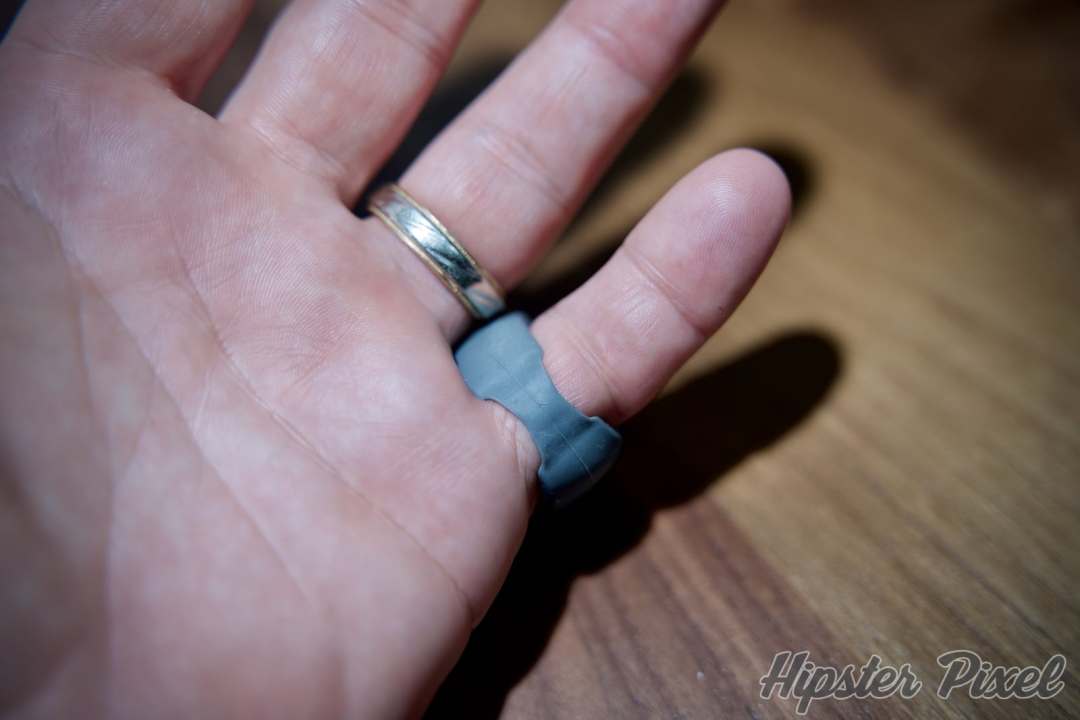
The unboxing experience is simple and clean. You immediately see the O2Ring that comes as a rounded display set on a rubber ring. The shape reminds me of the 80s “feeling stones” rings that could read your emotions and change colors based on it. It’s about the same size but a bit thicker.

The rubber ring feels very fragile, and after trying to fit it on my thumb, I was barely able to set it there. Tried other fingers like my ring finger and it was not comfortable. It cut the circulation after a few minutes. I was suggested to use the pinky finger as any finger will work fine.

This is much more comfortable and I can wear it all night without discomfort or feeling I will break it by stretching it too much. The size of the device is not large, but sometimes it can get in the way and a few times when resetting my pillow I felt like I almost ripped it out. These times I wished it was more compact!

The display is a nice little display that displays your recorded O2 level in percent as well as your heart pulse rate. Easy to see and not disturbed during the night. You could spot some of the red light leaks around your fingers at times, but it was never enough to wake me or my wife during the night.

Features

  • Transmissive oximetry technology
  • 4 second-recording intervals
  • 4 sessions of 10 hours recording memory, unlimited datasets in app
  • lots of customization options
  • report generation, CSV, PDF and binary exports
  • compatible with Apple Health
  • FDA listed


Performance

I’ve tried it for many nights and I also tried to use it when I had a different routine to see how it would affect my oxygen level during the night. I’ve always worn my mouthpiece for sleep apnea so that I could finally know for sure if the mouthpiece worked or not.

First, let’s get this out of the way.

This is not a diagnostic tool as with all consumer oximeter, there is a ±4% accuracy buffer, so this means that if the device reports 90% you could be anywhere between 86% and 94%. You can use this information to start discussing your situation with healthcare professionals but this data should not be used as final diagnostic data to define a treatment or medication.

The device is FDA listed which means that it’s known by the FDA but not that it was tested or approved by the FDA. The manufacturer is registered and so is the device. Here’s the FDA listing for you to review. Class 2 means that devices in that category “require some regulatory control of safety and effectiveness.” This basically means that it’s a good tool, but not a medically approved diagnostic tool.

Battery Life

I put it on when I go to sleep and take it off when I get out of bed. I tried to capture more than one night on a single charge, but I was not able to complete the second night in full. They advertise up to 16h on a full charge, but I was able to get exactly 15h of recording over two nights.

Even if it dies during the night, it still keeps the partial night data and you lose nothing of what was recorded.

Data Syncing

In the morning, I would put it back on and open the iOS app to sync the data. It takes a reasonable amount of time to sync via Bluetooth all the data. About 12-15 seconds for a full night. It also syncs very short periods when I just put it on to sync the data or see my current heart rate. I usually delete those and only keep full-night data sets.

Once synced, you can see the reports and lots of interesting details like the total time < 90%, the drops over 4%, and the number of drops per recording session. You even have an O2 Score that can be an easy metric to track and see how good you were oxygenated during the night. The average heart rate will also help you to see if you are putting unnecessary strain on your body because of a sleep condition like sleep apnea. I love that you can add notes to your recording session, you can use this to note things like at what time you got to sleep, or if you have been drinking alcohol or coffee the night prior. This is helpful to track as you will forget.

Warning and Alerts

There is a feature where you can set a limit and if it is reached or passed the O2Ring will alert you and note it in the data set. This is useful if you want to be woken up by the vibration if you enter a dangerous zone. Also, if you keep the app opened, the app can also alert you audibly.

Example of a bad night

Personally, I never reached the default threshold they set at the factory. Thankfully, this means even at night where I get many O2 drops, it never drops to dangerous levels. Most probably because of my mouthpiece, though. I did not want to start snoring again so I did not stop wearing it as it will mess with my wife’s sleep.

Reporting

The reports can be exported as PDF and shared with your healthcare specialist, but at the same time it can sync your data to Apple Health. I have enabled this as I also track my blood pressure with a non-smart device where I enter my systolic, diastolic pressure and heart rate using a custom iOS Shortcut I wrote to quickly enter the data in Apple Health.

O2Ring Mobile App Report Exporting

This way I have my night oxygen level, night heart rate, resting heart rate when I take my blood pressure and my blood pressure, all in the same app. I would also recommend looking at the Heart Report app on iOS, it has very customizable report generation that can also be shared with your doctor. You can choose what metric to include to make them more useful.

Conclusion

After testing the O2Ring for many, many nights I must say that I found the experience very good! It’s not one of the most expensive ring-type devices, and it does not all the things, but it does one thing and one thing well. Its tracking is efficient and it is very simple to operate. I kind of wish it was slimmer not to get caught in my pillow or sheets while I sleep, though. And its 15-hour battery life is not enough as often, I would set it and did not realize it was not fully charged and only captured 3 or 4 hours of data.

If you are looking for more insights into your blood oxygen level, the O2Ring is a great device to do so. Its reporting is quite good, and adding notes can help you see what you change in your routine and how it affects your sleep quality. For me it was most of all a way to see if my mouthpiece was actually working for my sleep apnea and I’m happy to report it does work as on regular nights, my O2 level does not drop significantly.

There are ways to make this little device better, though! First of all, ditch the MicroUSB port for a USB-C port. Make it slimmer so it’s more of a profile design, it will probably be less in the way of sheets and pillows. And make it so that the hardware is better optimized for longer battery life! 15 hours is not enough, try to aim for at least 24h which would be about 3 nights of sleep.

How does Wellue O2 Ring Help Pilots Combat Hypoxia

How does Wellue O2 Ring Help Pilots Combat Hypoxia

Article Overview

1. What is Hypoxia?
2. What Can Cause It?
3. Aviation and Hypoxia
4. Monitoring Your Oxygen Levels
5. Conclusion

One condition you should be mindful of when you are a pilot is hypoxemia and hypoxia. This isn’t something minor like airsickness; it can damage some major organs in your body if you don’t get it treated ASAP. In this post, we will look at what hypoxemia and hypoxia are and how to prevent them.

What is Hypoxemia?

Hypoxemia is caused by having low blood oxygen levels. Whether you have breathing issues or due to another cause such as piloting, hypoxemia can be serious and lead to hypoxia.

What is Hypoxia?

Hypoxia tends to come after hypoxemia. This is a condition that is caused by your body tissue not getting enough oxygen. When this happens, it can lead to the brain, lungs, and other parts of your body being damaged.

When you have hypoxia, your skin may change color and you may feel disoriented. It can be hard to breathe and you may sweat or feel anxiety. Should you suspect you have hypoxia, it is important for you to seek help ASAP. Hypoxia can have long-lasting effects, and it can be fatal.

If you feel the urge to cough, avoid doing so. This can cause stress on your lungs and lead to damage. It’s important to remain as calm as possible when seeking help for hypoxia.

When you seek help, you will go to the hospital and get your oxygen level checked out. You may have oxygen pumped into you until your levels go back to normal. Sometimes, you may be given an inhaler or another medicine that helps with your oxygen levels. Hypoxia treatments can range from being quick to involving complex machinery, depending on how severe it is.

What Can Cause it?

Hypoxia can happen at any age. In childhood, it could be due to asthma issues. If you have other issues like COPD, bronchitis, pneumonia, and fluid in the lungs, it can lead to hypoxia as well.

Some medications that can make it hard for you to breathe can lead to hypoxia as well. This includes strong painkillers, so talk to your doctor before you have it. Heart issues and anemia can lead to hypoxia as well. While this is very unlikely, being poisoned by cyanide can lead to hypoxia as well.

If you have asthma, it’s important for you to take care of yourself. Eat right, exercise, and avoid anything that triggers it. In addition, it’s important for you to have triggered as well.

Aviation and Hypoxia

pilots

When you are a pilot, you are susceptible to hypoxia. The most common form you may encounter is known as altitude hypoxia. This tends to happen because you are flying in an aircraft that is not pressurized.

As you go higher in the air, the air molecules start to spread. This causes the partial pressure to go down. What does this mean? Basically, when you go high enough, it’s difficult for your lungs to transfer oxygen to your body.

If you are flying in an aircraft that is not pressurized, it’s important for you to take precautions and have backup oxygen in case if a pressurized aircraft starts losing pressure. All commercial aircraft will have supplemental oxygen in case something happens.

Sometimes, you may not experience a reaction. This is due to the fact that there are several factors that will determine how you react. For one thing, it can be due to how fast you ascend and how long you spend in the air. It can be determined by what physical activity you are doing when you’re in the air, as well as the temperature in the air. How fit you are can determine your reaction, too.

Monitoring Your Oxygen Levels

Whether you’re a pilot or you have a condition that makes it possible to be exposed to hypoxia, it’s important to monitor the oxygen in your blood. This can help you figure out whether or not you are at risk, and allow you to get help as soon as possible. There are many different monitoring devices to help measure your levels, from fitness watches to O2 rings.

One O2 ring you should consider is the Wellue O2 ring. This is a ring you put over your finger, and it monitors your oxygen levels for up to 16 hours on a single charge.

It is meant to be an overnight tracker, but it can also be worn on a long flight, too. When you are flying, having a ring over your finger can ensure security. Should your oxygen levels drop below a certain level, the ring will alert you through vibration.

Like any other fitness tracker, you can use an app to keep track of your stats. You can also share your reports with your doctor. With that said, you do not need to have a smartphone to make it work, which is important when you’re high up in the air. It’s affordable, yet is made from the tech that will deliver accurate readings every time of day.

Should your levels go down, you will get an alert. You may want to descend and get some oxygen ASAP in that case.

Conclusion

Hypoxia is no joke. Your body needs oxygen to live, and as soon as it’s not getting enough, it can start shutting down. In some cases, not treating hypoxia can lead to various health problems along the way. When you are a pilot or when you have health issues, it’s important to keep track of your blood oxygen levels and don’t hesitate when they drop below a certain level to seek help.

As mentioned, it can happen to airline pilots, but anyone in any career can experience it as well. Before you fly high in the air or before you do anything major while having breathing conditions, get yourself an oxygen monitor. You will be glad that you did whenever you are able to monitor your blood levels and get help as soon as your levels drop.