Sleep Oxygen Monitor for Babies

Sleep Oxygen Monitor for Babies

Is the sleep oxygen monitor for babies worth it and why do we need it? One of the biggest concerns that new parents have is that their baby will stop breathing and won’t know it until it’s too late. You may even know parents that this horrific tragedy has happened to. However, this doesn’t have to be a concern when you have a baby monitor to track your baby’s heart rate and blood oxygen levels. Chapters 1. Best Sleep Oxygen Monitors for Babies 2. Learn More about Wellue Baby Sleep Oxygen Monitor 3. What does a Sleep Oxygen Monitor for Babies Do? 4. Do Baby Breathing Monitors Prevent SIDS? 5. Do You Need a Sleep Oxygen Monitor for Your Baby? 6. What is a Normal Oxygen Level for Baby? 7. What to Look for in a Sleep Oxygen Monitor for Baby? 8. Conclusion   Baby sleep oxygen monitor device provides you with real-time tracking and monitoring of your baby’s breathing movement. It will alert you as soon as there is a problem with your baby’s heart rate and oxygen levels so that you can get to your baby and get them breathing again.

Best Sleep Oxygen Monitors for Babies

There are many options on the market when it comes to oxygen monitors for babies. We’ll take a look at reviews of a few of the most popular ones here.

Owlet Smart Baby Monitor Duo

Owlet Smart Baby Monitor Duo

Price: $399 Buy it on Amazon The Owlet Smart Sock allows you to track the oxygen level of your baby as well as their heart rate. It also features a camera to be placed in the nursery so that you can keep an eye on your baby with encrypted HD video. Additionally, you can communicate via 2-way audio through the free iOS Android app. This Owlet Smart Sock slips onto your baby’s foot like a sock. The sock connects to the base station, which will glow green when everything’s OK. However, parents have reported that the Owlet Smart Sock will provide false alarms due to connection issues between the device and the base unit. Also, some parents don’t like that to see the video; you must keep the app open on your smartphone at all times.

Snuza Hero Baby Movement Monitor

Snuza Hero Baby Movement Monitor

Price: $129.99 Buy it on Amazon This device doesn’t have any sensor pads, cords, or wires to worry about. It clips onto your baby’s diaper. After 15 seconds of no abdominal movement and will sound an alarm after 20 seconds. While having a device that pairs with your smartphone via Bluetooth are nice, many parents love that they don’t have to mess with an app to get alerts from this device. Plus, since it’s so small, it’s easy to take with you when you are away from home. On the other hand, some parents feel the Snuza Hero medical device is too large to use on a newborn diaper. Also, if you swaddle your baby, it doesn’t work that well and if your baby is squirmy- it may fall off, resulting in false alarms.

Nanit Complete Monitor System

Nanit Complete Monitor System

Price: $379.99 Buy it on Amazon This device features a special swaddle to track your baby’s breathing movement through a geometric pattern. The camera tracks the pattern to show breathing motion. Additionally, this monitor will allow tracking of sleep patterns, enable you to see and hear your baby, and Livestream the video footage to your smartphone via the iOS Android app. Parents love this system because it’s easy to set up, even if traveling, and the images are crystal clear.

MonBaby  Breathing, Body Movement, & Temperature Monitor

MonBaby Monitor

Price: $98.99 Buy it on Official site This device clips onto your baby’s clothing or diaper so that you can get a reading on their breathing movement. Plus, if the baby rolls onto their stomach, it will sound an alarm. Many parents report that this is an excellent option for budget-conscious parents. Plus, it’s easy to use and pairs with your smartphone via Bluetooth. However, even those who give this device glowing reviews will mention that there are some disadvantages. One of those is that the battery life is only approximately 10 days- but there is a version featuring a rechargeable battery that will cost you a little more. The other issue with this device is that the Bluetooth connection is fairly weak.

Miku Smart Baby Monitor

Miku Smart Baby Monitor

Price: $399 Buy it on Official site This baby monitor has a free app that provides detailed information regarding the baby’s breathing, sleep patterns, and movement. Additionally, it monitors the temperature in the nursery. This is all done without any contact with your baby’s body. It also allows you to download and share photos and videos of your baby with loved ones and play music for your child. Most parents who reviewed this smart baby monitor say that it’s high quality. Many of them like the fact that you don’t have to worry about your child outgrowing it since it doesn’t need to be attached to the baby’s foot like a sock. Some of the parent reviews say that the connection to the monitor can be spotty, which is quite frustrating due to the price. Some other parents mention that the readings may not necessarily be very reliable. One parent mentioned that the monitor recorded 14 breaths per minute, but no baby was in the crib.

AngelCare AC337 Baby Breathing Monitor with Video

AngelCare Baby Monitor

Price: $150.99 Buy it on Amazon This baby monitor has a price tag between $100 to $200. The AngelCare Baby Breathing Monitor with Video features sensor pads placed under the crib mattress to track your baby’s breathing movement. If the sensors don’t pick up any movement in the crib after 20 seconds, it will sound an alarm. Additionally, it has a camera that also tracks the temperature of the room. Parents who have reviewed this device don’t have to contact the baby, and the parent unit has a fairly long battery life. Some of the other reviews mention the superb night vision of the camera. Of course, there are some disadvantages to this baby breathing monitor. If the baby wiggles to the edge of the crib where there are no sensors, the alarm may go off. Some of the reviews mention that the video quality isn’t the best. Finally, some others say that the system stopped working after only a few months.

Learn More about Wellue Baby Sleep Oxygen Monitor

As we mentioned, Wellue provide two products, Wellue Baby O2 Baby Oxygen Monitor and the Wellue Baby O2 S2 Baby Oxygen Monitor respectively. Both are specifically designed to monitor the oxygen level and heart rate of babies aged 0 to 3 in mind. Let’s take a closer look at each one of them below.

Wellue Baby O2 Baby Sleep Oxygen Monitor

Baby O2 Oxygen Monitor

Price: $149 Buy it on Official site The Wellue Baby O2 Baby Oxygen Monitor is wearable. The gentle, breathable fabric allows it to be worn comfortably on the baby’s foot like a sock. It also features an audio alert for low oxygen levels on the device and the mobile app. You can adjust the volume on the alarm as desired. This monitor features real-time tracking. That is, it continuously monitors, tracks, and records oxygen levels and heart rate every second. It has a built-in rechargeable battery that you can depend on for 16 hours of battery life. You can pair this device with the free app for your iPhone or Android with Bluetooth 4.0, which means you can be instantly alerted if oxygen levels or respirations change. You will be provided with real-time data and look back on historical records. Additionally, you can sync it with the software available for your PC or Mac. This will allow you to export/save detailed reports on your infant’s sleep habits. You can share these sleep reports with your child’s physician, especially if you believe there might be an issue. This will be great information to have on hand. Finally, this device does feature a built-in memory. It can work alone without being synced to a smartphone or software. The device will auto-sync with the smartphone app once it’s connected again.

Wellue Baby O2 S2 Baby Sleep Oxygen Monitor

Baby O2 S2 Oxygen Monitor

Price: $169 Buy it on Official site Like the Wellue Baby O2 Baby Oxygen Monitor, the Wellue Baby O2 S2 Baby Oxygen Monitor is wearable. The comfort level is comparable- it’s just like wearing a sock. The baby should not be bothered by it at all. This model is also designed with babies aged 0 to 2 in mind, allowing you to suit the baby’s sleep safety demands as well as foot size. This model also features a separate base station, which will sound an audible alarm if abnormalities are in the baby’s breathing or pulse rate. The rechargeable battery on the device will give you up to 16 hours of battery life, and the base station will last for up to 7 days. The free software for Mac or PC will allow you to create and save or export detailed sleeping reports. This way, if you feel like there is an issue, you can take the reports to your child’s doctor to review them. The built-in memory on the device will automatically sync to the app or software when they have connected again.

What does a Sleep Oxygen Monitor for Babies Do?

baby sleep oxygen monitor An oxygen monitor for babies tracks your child’s respirations through their blood oxygen, or O2, levels. Wellue Baby O2 Baby Oxygen Monitor and our Wellue Baby O2 S2 Baby Oxygen monitor have pads that wrap around the baby’s foot and ankle. The one that wraps around the ankle holds the device that measures the baby’s O2 levels and pulse rate. These are made to alert you if there is no breathing movement over a set period. Our devices come with a base station and sync to your phone via the iOS Android app. This way, you can get an alert if there’s something that’s not right. Also, it syncs to the software available for PC and Mac so that you can export and save detailed sleep reports. These days, more parents are using this type of monitoring to give them peace of mind, and many say that they feel much better having this information at their fingertips. On the other hand, others feel like these monitors are more trouble than they’re worth due to the risk of false alarm. Plus, some parents feel like they’re a bit pricey for an item that may or may not be beneficial. For some frequent questions about the baby sleep oxygen monitor, new parents can learn more in this article.

Do Baby Breathing Monitors Prevent SIDS?

Prevent SIDS

Some research indicates that baby monitors that track blood oxygen levels and heart rate of babies can help prevent SIDS because if the device detects that there’s a problem, it will send you an alert to either the base unit or your phone. SIDS, or sudden infant death syndrome, is the sudden, unexpected death of an infant under 1 year. Some physicians believe a smart baby monitor is a good investment, while others believe it may not. As you will see below, there are several different types of monitors. Some of them fit on baby’s foot, like the Owlet Smart Sock. Others feature sensor pads that slip under the crib mattress. There are also monitors that you can clip on a baby’s diaper to monitor movement. You will ultimately want to discuss the advantages and disadvantages of these monitors with your child’s physician before you decide on buying one.

Do You Need a Sleep Oxygen Monitor for Your Baby?

Oxygen Monitor for Baby

Honestly, if your baby was born at full term and healthy, you may not necessarily need an oxygen monitor for your baby. Periodic pauses in breathing can be normal and will typically resolve on their own as your baby gets older. On the other hand, if your baby has sleep apnea or other medical conditions that require monitoring- or if your baby was born prematurely, you may consider getting an oxygen monitor for your baby, at least for your peace of mind. Suppose the physician has not recommended this type of device for you, and you believe you would personally feel more comfortable monitoring your baby’s vitals. In that case, you should consider either the Wellue Baby O2 Baby Oxygen Monitor or the Wellue Baby O2 S2 Baby Oxygen Monitor. Of course, keep in mind that there is always the risk of false alarms.

What is a Normal Oxygen Level for Baby?

There are various ways to assess the health of an infant, including observing and measuring their blood oxygen level. This data will provide you with info regarding their heart, circulatory, and respiratory health. It’s a critical part of assessing their health, especially if the infant was born prematurely or has difficulty breathing.

Normal Oxygen Level for Baby

Normal Oxygen Saturation Levels

Oxygen saturation indicates the oxygen level in the blood. It’s commonly measured via pulse oximetry using an infrared light source without collecting a blood sample. For infants, the device is wrapped around their hands or foot to obtain a reading. An infant born prematurely will have a lower oxygen saturation level because their lungs are usually not fully developed. Their oxygen level is typically 84 to 90%. If they cannot maintain the minimum oxygen level, the physician may place them on supplemental oxygen. On the other hand, a full-term infant should have an oxygen saturation level of 95 to 100%, though various healthcare facilities may have different parameters.

What to Look for in a Sleep Oxygen Monitor for Baby?

As you will see below, there is a wide range of baby monitors that track your baby’s heart rate and oxygen levels. Each one of these has its own set of features/frills. You should keep in mind a few things when shopping for one of these baby monitors to track the baby’s heart rate and oxygen levels.

Notes on choosing baby monitor

Budget

As you will see, the price tag on these medical devices ranges from under $100 to over $300, depending on the features it has.

Reliability

Many parents report that these devices do sometimes give off a false alarm. Therefore, when you are researching the best model to suit your needs, this is something that you should keep in mind. Be sure to check out reviews when you’re comparing the various models so that you can find out how often these false alarms occur.

Camera Quality

Some of these baby monitors also feature a camera so that you can keep an eye on your baby as they sleep. If you want to ensure that you get a clear view, make sure that the camera records in HD and offers a nighttime viewing mode.

Apps

Another common feature for these baby monitors is connectivity to your smartphone via a free app for your phone. Most of these work through a Bluetooth connection, so you’ll have to be near the device for it to work. However, some will only send the information to the iOS Android app. If you would prefer not to have to use your phone to keep an eye on your baby, you may want to consider finding a model with the traditional parent base unit.

Additional Features

Finally, some of these devices, such as the Snuza Hero Baby, will vibrate if it does not sense breathing movement from your baby after a certain period. Many of them also allow you to track your baby’s sleep patterns to help you learn more about your baby’s rhythm. Additionally, some of them, such as our Wellue Baby breathing monitors, can provide you with expanded reports that you can share with your baby’s doctor to determine if there is an issue, such as sleep apnea. Finally, some of these baby monitors allow you to record photos or take videos of your baby so that you can share them with your loved ones. Sleep monitor for baby

Conclusion

If you are a new parent, you might be considering whether or not an oxygen monitor for babies is a good investment or not. Many parents believe they are a great idea because it will give you insight into your baby’s sleep routines and alert you if something happens. On the other hand, some parents believe that it might cause them to be more panicky due to potential false alarms. We believe that your baby is precious and deserves to be protected. What better way to make sure they are protected by using an oxygen monitor for babies? Leave a comment under this article and share it with more people.
Wellue AI ECG Recorder Review From Dr. Petar

Wellue AI ECG Recorder Review From Dr. Petar

-Dr. Petar Petrov, MD: cardiologist at Second City Hospital in Sofia; sleep specialist at Sleep&Health Medical Centre in Sofia, Bulgaria.

Q: Where did you learn about Wellue and AI ECG Recorder?

A:

I learned about Wellue from their partner Lepu Medical Technology and from the website getwellue.com. The first device that I bought was Wellue Smart Blood Pressure Monitor with ECG. I liked it so much that I ordered additionally 10 units for gifts for my friends and colleagues.

Q: What is your purpose of buying Wellue AI ECG Recorder?

A:

Recently my father had an episode of what appeared to be a TIA and atrial fibrillation had to be ruled out as the cause. Of course, I have access to the ECG holters in my hospital. However, I chose to buy the Wellue AI ECG recorder because of the reasonable price, to skip the waiting list of patients and to evade hospital contacts during the most devastating coronavirus wave in my country. Besides, I was appealed by the small size, functionality, lack of cables,  and ease of use of the device. The delivery was very fast (approximately one week). The recorder came in a small box with 10 ECG electrodes and a chest belt for the two different modes of attachment.

Case Study

I performed several 24-hour recordings which served me to guide the medical therapy. At first the AI analysis didn’t work, but the support team was very cooperative and solved the problem quickly. As a cardiologist, I looked carefully through the whole recordings page by page. And when I compared them to the AI analysis reports, I was surprised how accurate they were. I have been working with different kinds of ECG holters in my practice. And I must admit that the AI analysis is at least as good as the professional analysis software of the other recorders.

The ECG report starts with an overview of the findings. You see the total number of heart beats, percentage of atrial fibrillation and flutter, maximum, minimum and average heart rate, and long RR intervals data. Next you can see details for supraventricular and ventricular ectopy including number of extrasystoles, couplets, tachycardias, bigeminy and trigeminy. Following are the heart rate variability indices which are quite thorough:

On the second page of the report you can read the conclusion of the AI analysis which is in the form of a list of the ECG findings:

The third page presents extremely valuable information – the distribution of the events. You can follow hour by hour the appearance of the different pathological findings. This feature is very helpful as it can give us some hints regarding the cause of the arrhythmias. Surprisingly it is not available in some of the other ECG recorders that I use in the hospital. In the present case almost all of the pathological events were during the night, which served as an indication to perform a sleep polysomnography study as well.

The remaining pages of the report show examples of the minimum and maximum heart rate, as well as of the pathological events with time of occurrence:

A detailed description of Wellue AI ECG usage

Wellue AI ECG recorder is extremely easy to operate with. The recording begins with the attachment of the device to the patient’s chest. A short vibration indicates a successful start. With the help of ViHealth application via a Bluetooth connection you can check the quality of the signal on your mobile phone. A thirty-minute recording on the mobile phone is also possible. The recorder is exceptionally compact and lightweight and the patient does not feel any discomfort at all. The recording stops automatically with the detachment of the device or if the maximum duration of 24 hours is reached. A fully charged battery can handle at least three 24-hour recordings. You can check the battery status with the ViHealth application or with the LED indicator on the device. The recording is visualized with the software ECG browser. You need to do a free registration and to have an internet connection to use it. The download of the data is fast and time saving. There is an option to export as pdf files single pages or the whole recording. A good feature is that you can switch the amplitude between 1.25, 2.5, 5, 10, 20 and 40 mm/mV. However, it is not possible to change the “paper” speed and it is fixed to 25 mm/s for single pages and 12.5 mm/s if you export the whole recording into a pdf-file. This certainly is not a problem as you can enlarge the pdf file for a detailed view.

To receive the AI analysis, you need to upload the recording to the AI platform. It usually takes less than 30 minutes to get the results. When it is ready, a list of the grouped events appears on the left side of the screen. Then you can scroll easily between the different events.

The main advantages of the device are its remarkably compact size, ease of operation and powerful AI analysis that will suit the needs of both general public and professionals. There are, of course, some small disadvantages like the lack of a backup channel in case of artifacts. The ECG browser could include some more functions like manual measurements of intervals.

Overall, I am fully satisfied with the Wellue AI ECG recorder and believe, that this is the future of the cardiology equipment.

ECG Recorder with AI Analysis

Smart Blood Pressure Monitor with EKG

Oxygen Monitor for Baby – Frequent Q&A for New Parents

Oxygen Monitor for Baby – Frequent Q&A for New Parents

Oxygen monitors for babies especially for newborns are thought to give peace of mind to parents. Do you know why?

Compared to adults, the respiratory status of newborns requires close attention. If a newborn is found to have hypoxia during delivery, it is even more important to monitor the blood oxygen status closely after the baby is discharged from the hospital. That is to avoid severe hypoxia from occurring and affecting the normal development of the baby. So new parents are worried to check for their baby’s breath all night. Then the oxygen monitor for baby is bought by new parents at home to monitor the infant’s blood oxygen levels and heart rate and to sound alarms when detecting abnormalities.

Wellue has launched their innovative product BabyO2 S2 baby oxygen monitor to ease parents’ worries. In addition, Wellue health editors searched some frequent questions and answers for new parents encountered as follows, and we hope this can be helpful.

1. Manifestations of neonatal hypoxemia

The main manifestations of neonatal hypoxia are:

① Increased or decreased respiratory rate;

The criteria for increased respiratory rate are: in the condition of calm without oxygen, (less than 2 months of age) ≥ 60 breaths/min, (2 months of age – 12 months of age) ≥ 50 breaths/min.

② Over deep or shallow breathing: infants or newborns may show open-mouth breathing, moaning, grunting sound, nasal flaring, head bobbing;

③ Purple or gray lips and face;

④ Concave chest, etc.

 3. How do you perform a pulse oximetry measurement?

The pulse oximetry probe is wrapped in a wrap around the baby’s right hand or one foot. The probe is connected to a monitor that displays the oxygen levels, just like the Wellue BabyO2 S2 baby oxygen monitor. The Owlet smart sock doesn’t have a single monitor to screen because they use the phone APP. See more details about BabyO2 S2 VS Owlet Sock.

Just bundle the oxygen probe on the baby’s dorsal foot, this location is relatively rich in arterial blood flow. Because the newborn body movement will affect the oxygen measurement, you can use a strap to tie the probe data cable at the ankle to fix it, reducing the role of sensor shaking, and then to monitor the baby’s blood oxygen status for a long time. See multiple ways to wear baby oxygen monitor.

When the baby is calm and warm, it takes only a few minutes to obtain a reading. The number will take longer to obtain if the infant is crying, hypothermic and wet.

4. Why is the pulse oximetry method used to screen CHD (congenital heart disease)

Pulse oximetry can be used to determine the oxygen level in the blood and has been used to monitor the oxygen level in the blood of infants in special monitoring.

It can also indicate the infant’s cardiopulmonary function. Pulse oximetry can also help identify infants with severe congenital heart disease, infections and pneumonia. Infants with severe congenital heart disease, infections and pneumonia often have very low oxygen levels in their blood. If the newborn fails the screening test, the medical workers should use an echocardiogram to complete further diagnosis.

If the newborn fails the screening test, the provider should use an echocardiogram to complete further diagnosis.

 5. What is CHD

Congenital heart disease is a problem with the structure of the heart or the flow of blood through the heart. Congenital heart disease is the most common birth defect and is often asymptomatic in the newborn period.

6. How is congenital heart disease (CHD) monitored?

Before a newborn is discharged from the hospital, the hospital should check:

  • The infant’s heart murmur
  • Abnormal heart rate, breathing or blood pressure

Pulse oximetry can detect low oxygen levels in the blood. Children with critical precocious heart disease are often asymptomatic after birth. However, if the infant has any of these symptoms, further testing should be performed.

7. Will pulse oximetry or baby oxygen monitor hurt my baby

No. It is a painless and non-invasive method.

8. What is the normal reading

For oxygen saturation in the baby’s foot:≥ 95%;

Infants with abnormal function or infection have low oxygen saturation readings. Sometimes low pulse oximetry caused by birth crush is normal. Your child’s physician may also do additional oxygen saturation measurements for the baby.

For resting heart rate (pulse rate):

  • Newborns 0 to 1 month old: 70 to 190 beats per minute
  • Infants 1 to 11 months old: 80 to 160 beats per minute
  • Children 1 to 2 years old: 80 to 130 beats per minute
  • Children 3 to 4 years old: 80 to 120 beats per minute
  • Children 5 to 6 years old: 75 to 115 beats per minute
  • Children 7 to 9 years old: 70 to 110 beats per minute
  • Children 10 years and older, and adults (including seniors): 60 to 100 beats per minute
  • Well-trained athletes: 40 to 60 beats per minute

9. Is it possible for an infant with severe congenital heart disease to have a normal pulse oximetry reading

It is possible. Watch for the following symptoms in your child.

  • Difficulty in breastfeeding
  • Sweating around the head (especially while breastfeeding)
  • Shortness of breath
  • Pale or bluish skin
  • Lethargy and immobility
  • Swollen face, arms and legs
  • Irritable or difficult to calm

10. Premature baby and newborns in the NICU (neonatal intensive care unit)

    Although pulse oximetry monitoring is usually part of daily management for preterm infants and the baby is observed for a longer period of time than other infants without signs of congenital heart disease, some forms of congenital heart disease may go undetected in the NICU.

    Routine care in the NICU does not usually involve blood gas tests for oxygen saturation measurements, raising the possibility of missed screenings.

    For those infants who do not have an echocardiogram, quantitative pulse oximetry screening should be performed as soon as assisted oxygenation is terminated. If the infant has already had an echocardiographic screening, no additional pulse oximetry screening is required.

    Wellue Checkme O2 Max Review

    Wellue Checkme O2 Max Review

    Wellue O2ring gif

    I’m very impressed with the Checkme O2 Max!

    Lynn A.

    ★★★★★

    The Checkme O2 Max from Wellue is a sophisticated device that is easy to use and I’m very impressed and grateful for its assistance.   I first was aware of apnea in my 30’s when I would startle awake and sit up gasping for breath.  These episodes seemed to improve over the years (I’m now 75) and I  attributed occasional morning headaches to sinus/allergy issues though my husband of 30+ years has often mentioned having to nudge me to re-start my breathing in the night.  I was prompted to look up O2 monitoring apps after a recent middle of the night trip to the emergency department after waking with unaccountable rapid/forced breathing and subsequent confusion.  Although the cause wasn’t identified, and I fully recovered, it did take about 10 hours for my B.P. to return to it’s usual levels.  It wasn’t until a few days later my husband suggested the incident could have been apnea-related.

    I purchased Wellue’s most expensive pulse oximeter because it wasn’t much more money and offered the 2-minute sampling rather than 4 minutes, has a powerful (7 day) battery plus it had the option of vibration or sound alerts for low O2 levels.  I also discovered it could be set for a sound alert if the sensor comes off your thumb (only 2 times in my 13 days of records so far),  and that I can reduce the threshold for the alert below 90% (initially I was aware of all of the alerts while sleeping and so I reduced the alert threshold to 88% so my brain would be less likely to habituate to the vibration–and so I might sleep better).  The summary reports on the smart phone app are very helpful and I also keep the more detailed records on my desktop via the O2 Insight Pro app (Wellue kindly quickly supplied an improved cable for this latter application to work reliably every time–otherwise it was a bit hit or miss on my older PC).  My husband has noticed that my sleeping is now much quieter (I’ve always been a snorer and now apparently I rarely do)—and that I seem to sleep more deeply.  I feel refreshed on waking up after using the Wellue Checkme O2 max and am now mostly unaware of the vibration alerts. In glancing through the records, I’m wondering if there might be some sort of subtle training/learning going on since after one week the depth of the O2 drops appears to decrease, and this is even more apparent now after these almost two weeks of use.

    Great monitor with helpful support

    It’s Amazing!

    ★★★★★

    Let’s talk medical devices for a minute…. I just have this new bad boy a try and let me tell you…. It’s AMAZING. 

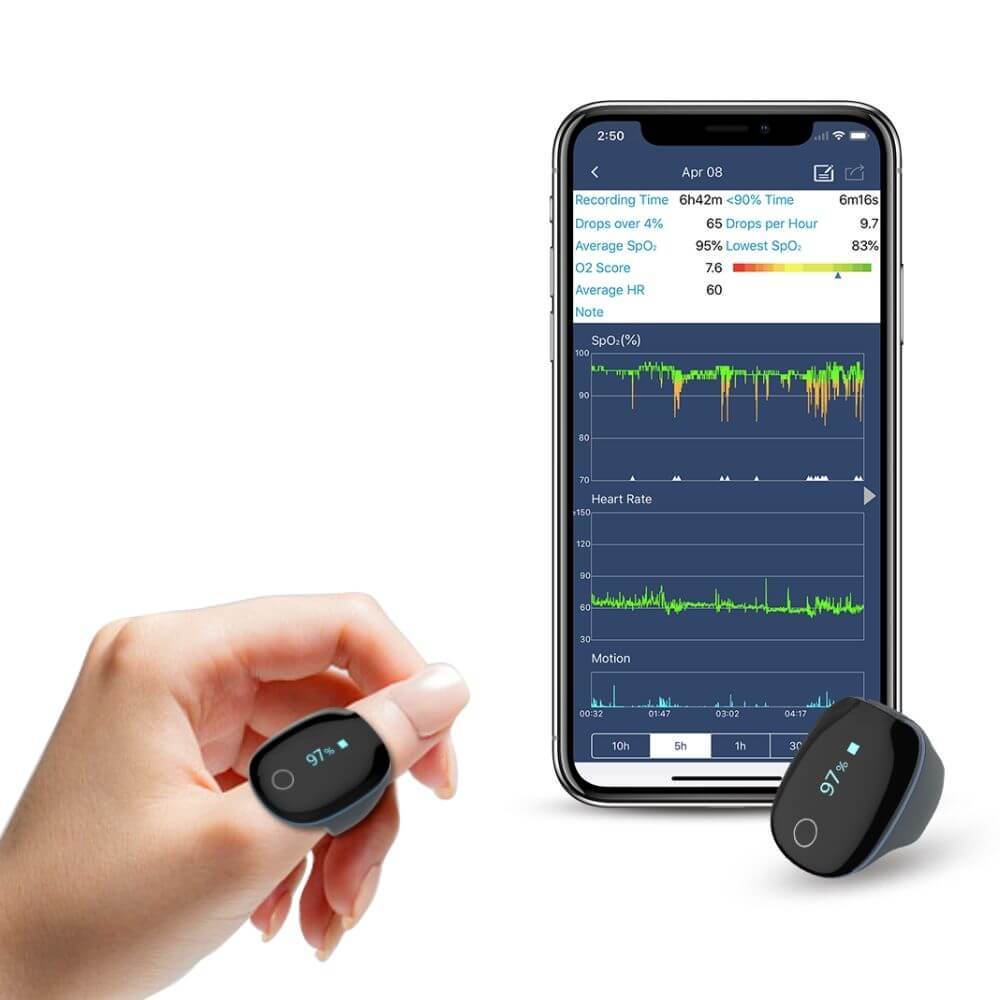
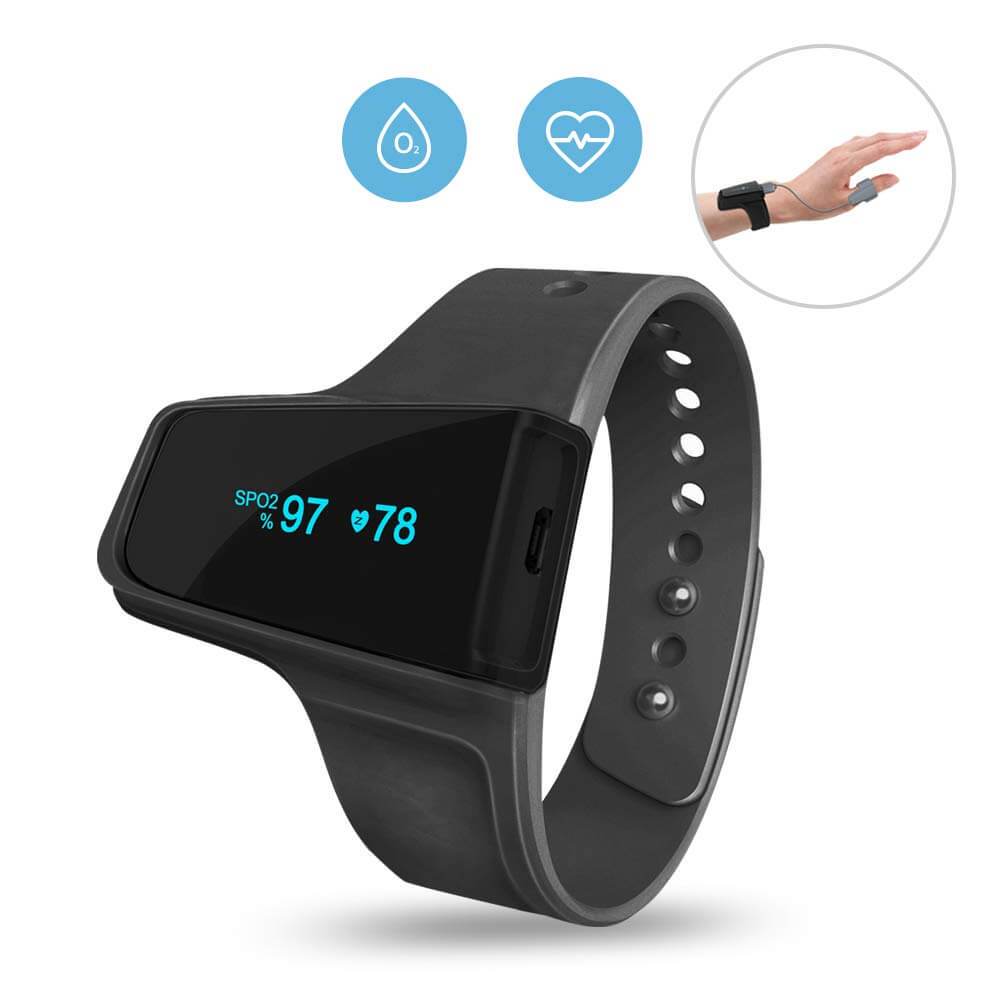
    According to the American Sleep Association, the repetitive breathing pauses caused by sleep apnea during the nights can occur several times per hour and last for over 10 seconds. Checkme™ O2 Max wrist oxygen monitor can work as a monitor, tracks your overnight oxygen levels and heart rates, so you can view your night data in the day.

    In the middle of the night if your oxygen falls too low you receive an alarm telling you to wake up and breath.  The soft silicone sensor makes it easy to sleep while on your wrist.  Also can be worn durning the day. You also can manually set your HR so that you can keep track of how your heart is doing. 

    Using their app, you get great records of all results. 

    The device can store 4 sessions data, up to 10 hours for each. 

    I love that Check 02 not only records your HR and Sp02 but  it also records night movement and data history on your smartphone and share the information with your doctor. How cool is that? 

    Because of this amazing product I was able to find out that my oxygen dropped to 83% while sleeping. I also had a heart rate of 139 with a PAC (Premature atrial contractions). 

    If it couldn’t get any better. It stays charged for 70hours. Wow!! 

    For someone like myself this gadget is a life saver. I’m able to to see my numbers and determine if I need to relax or start my infusion. 

    I’m very impressed with it and grateful for its help. If you just want to keep track of your health, HR or oxygen level then this is your device. But this also is great to share detailed result with your doctor with a press of a button to your email or face to face. If you think you may have sleep apnea this can track that and help your doctor with his thoughts on that diagnosis. 

    It also gives you 2-minute sampling rather than 4 minutes. It can also  be set for a sound alert if the sensor comes off your thumb, which I don’t ever see happening. 

    But I am now aware of all of the alerts while sleeping and or awake. Making me feel comfortable to live my life with chronic illness.

    Great monitor with helpful support

    Stephen P.

    ★★★★★

    I have bought and owned at least 4 different spo2 monitors such as checkme doctor, checkme max, checkme be4 max, i own all and have tested them all and they all matched readings from 1 hand using at same time on different fingers

    and can say there accurate i got my 1st 1 in 2019 and then bought a family member the new max model in may2021 due to there ill health and due operations on there lungs and a weak heart

    The max model has spo2 monitor plus a pulse rate monitor which both have an alarm system when they drop below a certain level then it beeps and vibrates

    Support are very helpful with replacements when it comes to replacement charge/data cables or of finger sensors am a restless sleeper and due this sensors have malfunctioned and wellue have kindly replaced sensors as there warranty and guarantee is for a full year from purchase and there fast to reply within 24 hours so am very happy with there support system.

    Learn more about checkme o2

    Great Device and easy to use.

    Jose M.

    ★★★★★

    This device is of very high quality. Comfortable on the finger and the wristband.
    Software interfaces once you open the app and downloads your nightly results automatically. This is a medical grade device with data that quite honestly could add years to your life because sleep apnea as a result of an airway restriction (snoring) is detrimental to your cardio muscle. The SPo2 alarm can be set for audio or vibrational mode and I learned that my snoring issue only occurred when I slept on my back with resultant jaw opening.


    5 star product and any questions are immediately answered by product support.

    Provides Good CPAP Corroborating Info

    Philip A.

    ★★★★★

    I use the Checkme O2 Max to confirm the information provided my ResMed AirSense-10 CPAP machine. It is nice to be able to see that the info from the two devices almost always confirms each other’s report. Yes, the device is a bit pricey, but its a real bargain compared to a local health supplier who charges $50 for a one-night recording oximeter test. To provide full disclosure, I am a hopeless addict to home healthcare electronic devices. 😉

    View More Product Details

    Apple Watch VS O2ring, Should You Trust Apple Watch on Blood Oxygen Readings?

    Apple Watch VS O2ring, Should You Trust Apple Watch on Blood Oxygen Readings?

    The Apple Watch Series 7,continuesto include an ECG for monitoring heart health as well as a blood oxygen monitor. While the existing ECG did receive FDA clearance, the blood oxygen monitor did not. It has raised some questions after its launch:

    ·How accurate or useful (or revolutionary) is that blood oxygen feature?

    ·Should those who can afford the $399 rush out and buy one?

    ·Can the future of health really be on our wrist?

    Health experts say while the data collected from wearable devices is helpful for both patients and doctors, they are not a replacement for medical-grade devices.

    Low blood oxygen levels, or hypoxemia, have been linked to COVID-19 because the disease affects your ability to get enough oxygen. Doctors have used SpO2 levels to determine the severity of COVID-19 cases and treat those patients accordingly. But hypoxemia can be caused by many other heart and lung issues, such as asthma, pneumonia, and congenital heart disease.

    What Is the Accuracy?

    Apple’s marketing release tells us that their blood oxygen sensor “employs four clusters of green, red, and infrared LEDs, along with the four photodiodes on the back crystal of Apple Watch, to measure light reflected back from blood. Apple Watch then uses an advanced custom algorithm built into the Blood Oxygen app, which is designed to measure blood oxygen between 70 percent and 100 percent.”Apple is marketing this as a wellness feature rather than for medical monitoring.

    Although we don’t know for sure about AW7’s accuracy, we do have studies showing us that reflectance oximetry (used in AW7) is not as accurate or stable as transmittance oximetry (used in fingertip pulse oximeters.) It’s important to understand this significant technological difference.

    Since Apple was marketing the ECG as a tool for monitoring health conditions, the company had to prove it worked for its intended purpose.


    “While these devices can help provide patients with a general trend regarding their health, the data should not be used to provide medical care or trigger medical interventions,” said Dwivedi, assistant professor at Donald and Barbara Zucker School of Medicine at Hofstra and cardiologist at Northwell Health.

    How Blood Oxygen Monitor Works

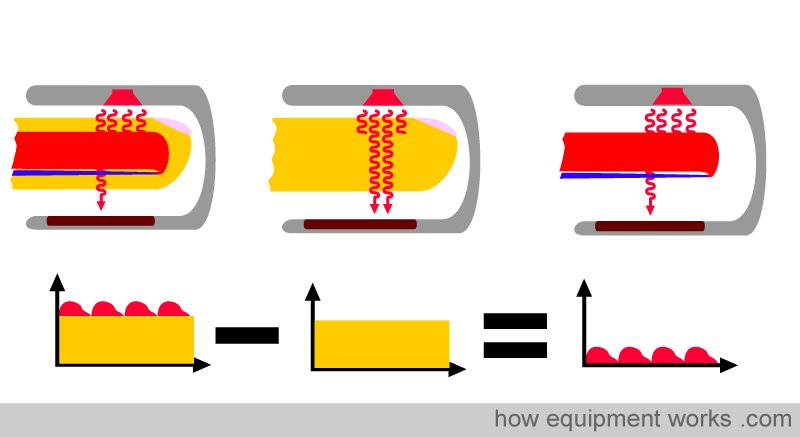
    Oximeters determine oxygen saturation (SpO2) in tissues by quantifying the concentration of hemoglobin bound to oxygen (oxyhemoglobin or HbO2) and hemoglobin (Hb) without oxygen. Pulse oximeters, which are widely utilized in medical settings, utilize photoplethysmography (PPG) performed on pulsatile arterial blood at two different wavelengths to obtain a ratio of HbO2 and Hb. Optoelectronic sensors composed of light-emitting diodes and photodiodes that operate at red and near-infrared wavelengths capitalize on the differing absorptivity of Hb and HbO2.

    Transmission-mode oximetry has been the gold standard but requires sensing at tissue locations that can be transilluminated with the light shining through the tissue such as the earlobes and fingers.

    With reflective mode oximetry, the light sources and photodiodes are on the same side of the tissue and a thin measurement site is not required. Thus, it can be used at measurement sites such as the forehead, chest, and (most relevant for this discussion) the wrist, where a band or watch can be utilized.

    Reflectance mode oximetry, the model utilized by Apple Watch, has been shown to be inferior to the transmission mode used by fingertip pulse oximeters, likely due to increased variability introduced by ambient light, the pressure applied, and positional variation inherent to the method.

    Some smartphone apps have claimed an ability to measure SpO2 using reflectance, but when two were studied they were found to be seriously inaccurate. Walter Schrader, MD, who co-authored the smartphone oximetry study, has told that he does not recommend any smartphone app as a reliable pulse oximeter.

    Should You Buy Apple Watch for Medical Use?

    We can assert that the wrist technique is generally less accurate than the typical technique of measuring blood oxygen using a finger sensor.

    If you are primarily excited by the blood oxygen sensing capabilities of AW, I would recommend instead purchasing an oximeter. At least we have some data on these devices, which use the more reliable transmission mode for measuring oxygen saturation. Anthony C. Pearson, MD, a noninvasive cardiologist, and professor of medicine at St. Louis University School of Medicine.

    Get Your Medical-Grade Devices for Oxygen Monitor

    O2Ring Oximeter Continuous Ring Oxygen Monitor

    Reference:

    1. HealthLine: Here Is What Heart Health Experts Think About the Apple Watch Series 7

    2. Medpagetoday: Should You Trust the New Apple Watch on Blood Oxygen Readings?